
Call us now :08045812892
 Send Inquiry
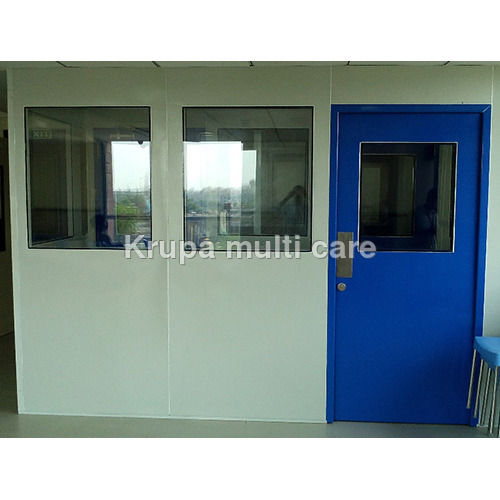
PPGI Clean Room
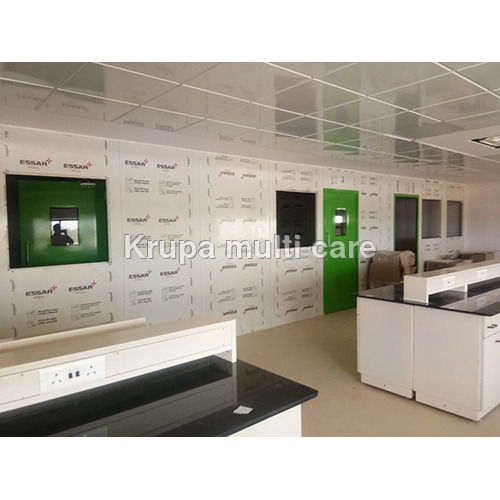

PPGI Clean Room Specification
- Type
- PPGI (Pre-Painted Galvanized Iron) Modular Clean Room
- Feature
- High Quality
- Lighting
- LED/CFL Cleanroom Light Fixtures (Flush Mounting)
- Air Flow
- Laminar/Non-laminar as per requirement
- Power Consumption
- Depends on equipment installed (standard cleanroom lighting and filtration)
- Air Volume
- Custom as per cleanroom class (typically 1200-3000 m3/h)
- Material
- PPGI Panel (Pre-Painted Galvanized Iron)
- Thickness
- 0.5 mm - 1.0 mm (customizable depending on panel design)
- Frame Material
- Aluminum/Steel framework
- Condition
- New
- Door
- Powder-coated/PPGI Doors with Double Glazing (Vision Panel Option)
- Floor
- Epoxy/ESD/PVC/Antistatic Vinyl as per requirement
- Weight
- Variable based on size and configuration
- Dimension (L*W*H)
- Customized as per room layout and client requirements
- Application
- Industrial, Commercial
- Nozzle
- Optional, for air shower or specific applications
- Filter Type
- HEPA/ULPA
- Voltage
- 230V/415V as required
- Filters
- Pre-filter, HEPA filter (99.97% at 0.3 micron)
- Fire Resistance
- Panels are fire retardant as per IS/ASTM standards
- Accessory
- Integrated return air risers, coving, flush doors, vision panels
- Custom Colors
- PPGI panels available in White, Green, Blue, Grey, and custom shades
- Ceiling Type
- Walkable/Non-walkable cleanroom ceiling, PPGI finish
- Compliance
- GMP, cGMP, ISO 14644, FDA compliance supported
- Wall Panel Finish
- Smooth, Anti-static, Anti-microbial coating available
- Air Conditioning
- HVAC integrated with HEPA filtration
- Sound Insulation
- High sound insulation value through insulated panels
- Window Type
- Double glazed, flush-mount observation window
- Sealing System
- Silicone/Polyurethane sealant for airtight joints
- Pass Box
- Static/Dynamic pass box available with UV sterilization option
- Modular Partition
- Demountable, relocatable partitions
- Electrical Fittings
- Flush mounted power sockets, data ports, emergency switches
- Cleanliness Level
- Class 100 to Class 100,000 (ISO 5 to ISO 8) as per project
- Panel Insulation
- PUF/EPS/Mineral wool core with density 402 Kg/m3
PPGI Clean Room Trade Information
- Minimum Order Quantity
- 1 Square Meter
- Supply Ability
- Square Meter
- Delivery Time
- 5 Days
- Main Domestic Market
- All India
About PPGI Clean Room
PPGI Clean Room is a room within which the number concentration of airborne particles is controlled and classified, and which is designed, constructed and operated in a manner to control the introduction, generation and retention of particles inside the room. PPGI Clean Room is made with a thin coating layer that consists of 18-20 microns, and continuous lines are used in the sheet manufacturing facility.
Product Type -PPGI Clean Room
Material - Galavanized Iron
Advanced Panel & Sealing Technology
Engineered with PPGI panels finished in smooth, anti-static, and antimicrobial coatings, the system delivers superior hygiene and contamination control. The panel core options (PUF/EPS/Mineral Wool) are designed for durability and high sound insulation. Airtight silicone/polyurethane joint sealants support stringent cleanliness standards, while the modular design facilitates easy installation and future reconfiguration.
Comprehensive Compliance & Safety
Each cleanroom system complies with GMP, cGMP, ISO 14644, and FDA requirements. Panels meet fire-retardant norms established by IS and ASTM standards. Electrical fittings, HVAC with HEPA/ULPA filtration, and flush observation windows facilitate effective process monitoring and safety within pharmaceutical, medical, and high-tech manufacturing environments.
Customization & Versatile Application
PPGI Clean Rooms are available in a range of thicknesses, dimensions, and custom panel colors, suitable for diverse layouts and technical demands. Integrated features such as static/dynamic pass boxes with UV sterilization, walkable ceilings, modular partitions, and various flooring options ensure adaptability to unique project requirements.
FAQ's of PPGI Clean Room:
Q: How is the PPGI Modular Clean Room installed and customized for different layouts?
A: The clean room is constructed using modular PPGI panels that are manufactured to precise room dimensions as per client requirements. The panels, ceiling types, and other integrated accessories (such as pass boxes and observation windows) are customized to fit any specific room layout, ensuring rapid on-site installation and flexibility for future modifications.Q: What are the main benefits of the anti-static and antimicrobial wall finish?
A: The anti-static and antimicrobial coating on the PPGI wall panels minimizes the accumulation of dust and prevents microbial growth. This feature is essential for environments where particulate and contamination control are critical, such as pharmaceutical and electronics manufacturing, leading to superior product quality and regulatory compliance.Q: When should the cleanroom panels' insulation type (PUF, EPS, or Mineral Wool) be selected?
A: The panel insulation type should be chosen based on the required fire resistance, sound insulation, and thermal performance as dictated by your application. PUF offers high thermal insulation, Mineral Wool provides excellent fire resistance, and EPS is suitable for general insulation needs. Selection is typically done during project specification to match regulatory and process requirements.Q: Where can PPGI Modular Clean Rooms be used?
A: These cleanrooms are widely used across the pharmaceutical, biotechnology, electronics, medical devices, and food processing industries in India. Their modularity and compliance with ISO, GMP, and FDA norms make them suitable for both new facility setups and facility upgrades.Q: How is airtightness maintained in the cleanroom system?
A: Airtightness is ensured through the use of high-performance silicone or polyurethane sealants at panel joints, flush mounting of observation windows and electrical fittings, and properly sealed doors. This setup helps maintain positive air pressure and prevents contamination inflow or outflow, supporting ISO cleanroom classifications.Q: What types of ceilings and floors are available for these cleanrooms?
A: You can choose between walkable and non-walkable ceiling panels based on maintenance needs. Flooring options include epoxy, ESD (Electrostatic Discharge), PVC, or antistatic vinyl, which can be selected according to process requirements and chemical resistance demands.Q: What levels of cleanliness and filtration capabilities does the cleanroom offer?
A: The cleanroom supports Class 100 to 100,000 (ISO 5 to ISO 8) cleanliness levels. HEPA (99.97% at 0.3 micron) or ULPA filters are integrated into the HVAC system for effective air purification, ensuring that air quality remains consistent with pharmaceutical and high-tech industrial standards.Tell us about your requirement

Price:
Quantity
Select Unit
- 50
- 100
- 200
- 250
- 500
- 1000+
Additional detail
Mobile number
Email

More Products in Clean Room Category
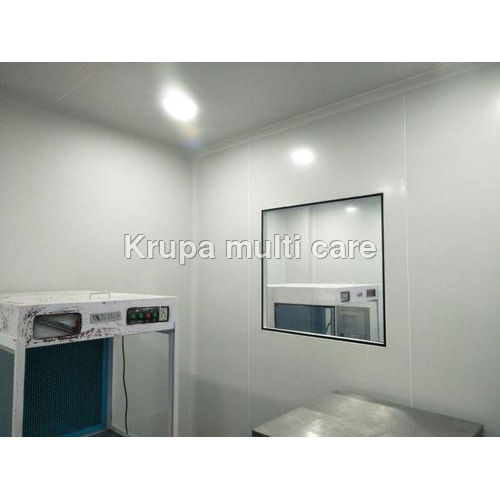
Clean Room Wall Panel
Price 2080.0 INR / Square Meter
Minimum Order Quantity : 1 Square Meter
Feature : High Quality
Condition : New
Application : Industrial, Commercial, PHARMA, INDUSTRIAL, HOSPITAL, AEROSPACE, BIOLOGICAL
Material : Galvanized steel
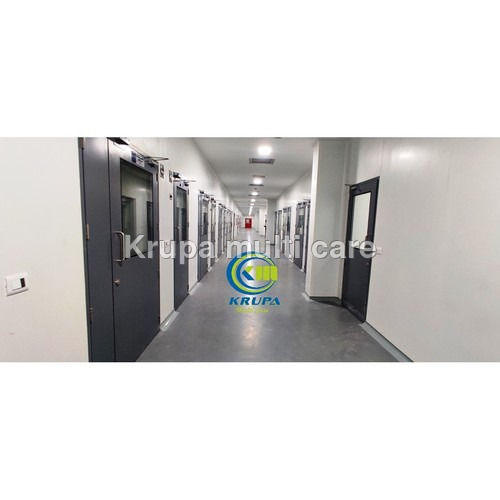
Clean Room Panel
Price 2050.0 INR / Square Meter
Minimum Order Quantity : 1 Square Meter
Feature : High Quality
Condition : New
Application : Industrial, Commercial, Pharmaceuticals, Hospitals, Laboratories, Food Processing Units, Electronics
Material : Galvanized steel
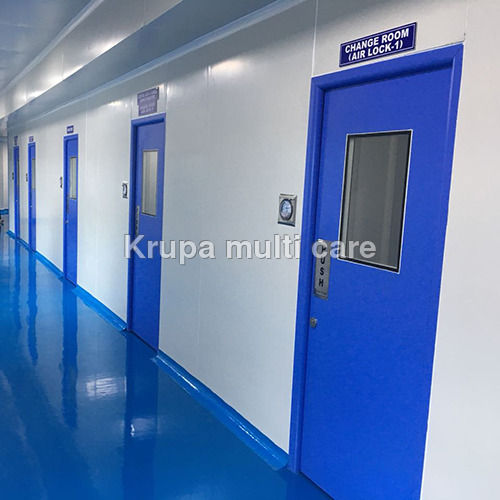
Modular Clean Room
Price 1350 INR / Square Meter
Minimum Order Quantity : 1 Square Meter
Feature : High Quality
Condition : New
Application : Industrial, Commercial
Material : Stainless steel
PCGI Clean Room
Price 2000 INR / Square Meter
Minimum Order Quantity : 1 Square Meter
Feature : High Quality
Condition : New
Application : Industrial, Commercial


 Send Inquiry


Our Products


Plot No - 26, Durga Industrial Estate, Near Jain Temple, NH - 8, District - Sankarda,Nandesari INA - 391350, Gujarat, India

Mr Roshan Patel
(Director)
Mobile :08045812892
 Send Inquiry
 Send SMS
 Call Me Free
Developed and Managed by Infocom Network Private Limited.


 English
 Spanish
 French
 German
 Italian
 Chinese (Simplified)
 Japanese
 Korean
 Arabic
 Portuguese